
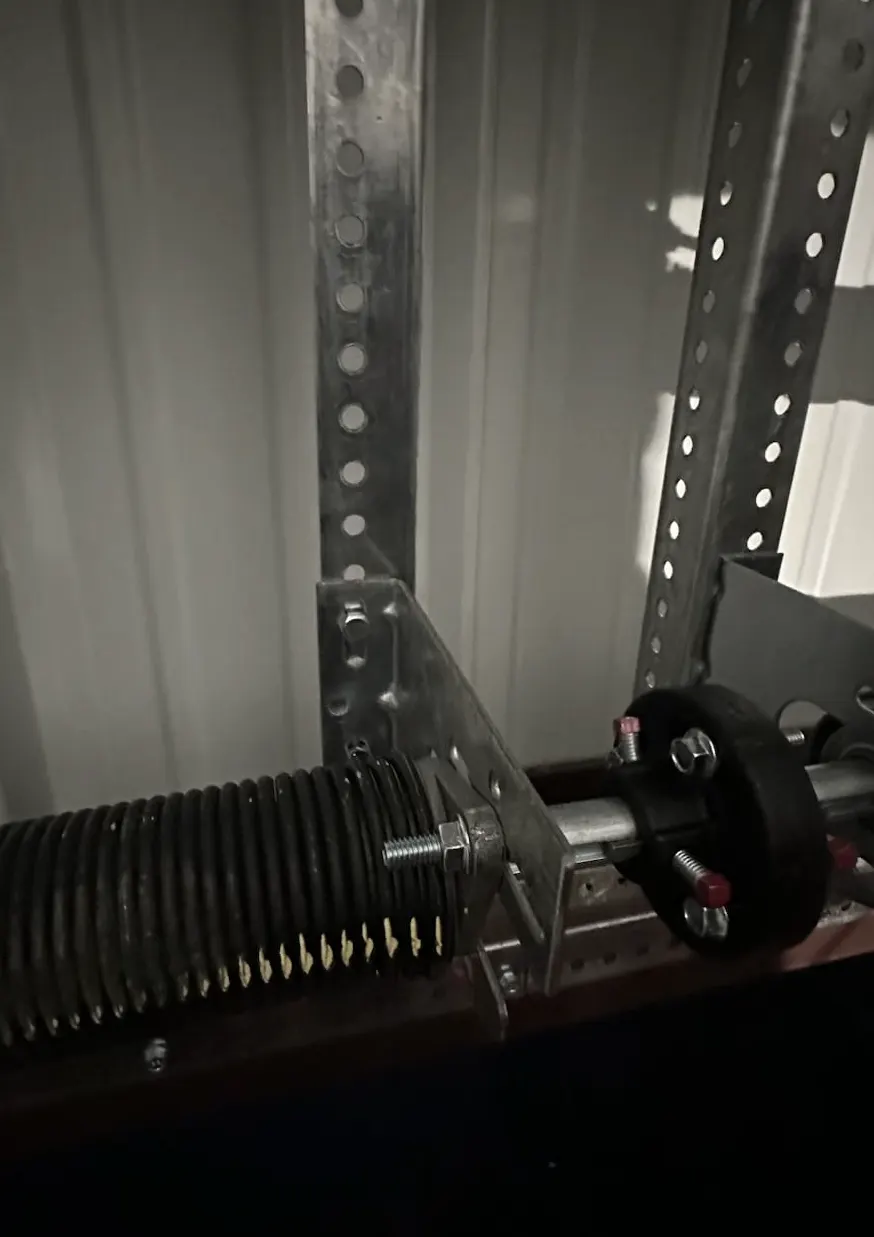
What a Technician Sees on This Kind of Call
The call usually starts the same way: "My opener is dying." The chain sounds strained, the door crawls up instead of rising smoothly, or the unit reverses halfway and refuses to close. The homeowner assumes the opener motor is shot and wants it replaced. More often than not, the opener is innocent. It's been fighting a door that's out of balance for months, maybe longer, and the motor finally gave up trying to compensate. Around here, where humidity swells wood panels and salt air eats at spring coils near the coast, this pattern shows up constantly — the opener gets blamed for a problem that started with the springs.
What an Unbalanced Door Does to Your Opener
A properly balanced garage door should feel almost weightless. The springs — not the opener — are supposed to carry the bulk of the door's weight. The opener's only job is to add a small amount of force to start and guide the movement. When springs weaken, corrode, or lose tension, that balance shifts, and the opener starts doing work it was never built for.
Over time this shows up as a straining motor, a stripped drive gear, a slipping belt or chain, or a door that trips the auto-reverse safety feature because the opener senses resistance it can't overcome. Replace the opener without fixing the balance problem, and the new unit will wear out on the same timeline as the old one.
Tools You'll Need
- A sturdy step ladder
- A flashlight
- Your phone or a notepad to jot down what you observe
No wrenches, no spring tools — this test is purely observational and doesn't involve touching the springs themselves.
How to Test Balance: Step by Step
- Close the door completely. Start from a fully closed position so you have a consistent baseline.
- Pull the manual release cord. This is the red-handled cord hanging from the opener trolley. Pulling it disconnects the door from the opener so you're testing the door alone.
- Lift the door by hand to about waist height (roughly 3-4 feet). Use steady, even force — don't yank it.
- Let go and watch what happens. A balanced door will stay roughly where you left it, maybe drifting down an inch or two.
- Repeat the test at the quarter-open and fully-open positions. Balance can change at different points along the track, especially on older doors.
- Pay attention to sound and feel while lifting. Grinding, catching, or one side feeling heavier than the other are signs something beyond simple spring tension is wrong.
- Reconnect the opener by pulling the release cord again or following the trolley back into the carriage per your opener's manual.
What the Results Mean
If the door falls or drifts down quickly, the springs have lost tension and are under-delivering. If it shoots upward on its own, the springs are over-tensioned — also a problem, just in the other direction. Either result means the opener has been compensating, and that compensation has a cost in wear and eventual failure.
What a Homeowner Can Safely Check vs. What Needs a Technician
The lift-and-release test above is safe to do yourself. So is watching for patterns over time — does the opener strain more on humid afternoons, does the door sound different after a heavy rain, has the chain started slipping more often. All of that is useful information to have ready when you call for service.
What's not a DIY job is adjusting the springs themselves. Torsion springs are under extreme tension and adjusting them requires specific winding bars and knowledge of turn counts — this is where people get seriously hurt attempting a fix with the wrong tools. Track alignment checks, torque measurement, and swapping worn cables or rollers also belong to a technician, since a cable that looks fine can be a few strands away from snapping under load.
Why This Matters More in This Climate
Salt air near the coast accelerates corrosion on spring coils faster than it would inland, which shortens the window before tension starts dropping. Humidity swells wood-composite door panels, subtly changing the weight the springs have to carry across seasons. And because doors here are often built to wind-load ratings, they're heavier to begin with — meaning an imbalance puts more strain on the opener than it would on a lighter door elsewhere. After any period of heavy rain or storm activity, it's worth running the balance test again, since track shifts can throw things off without any obvious damage.
When to Call Seminole Garage Door
If your door fails the balance test — drifting, shooting up, or showing uneven resistance — that's the point to call in a technician rather than guess further. Seminole Garage Door's Garage Door Spring Repair service includes measuring actual spring torque and replacing springs as a matched pair, which keeps both sides lifting evenly. If the test also reveals worn or rusted cables, our Cable & Roller Replacement service addresses the parts most affected by coastal moisture before they become a bigger failure.
If your door in Seminole, FL feels heavier than it should or your opener's been working overtime, give us a call — we'll run the full diagnostic and fix the actual problem, not just the symptom.